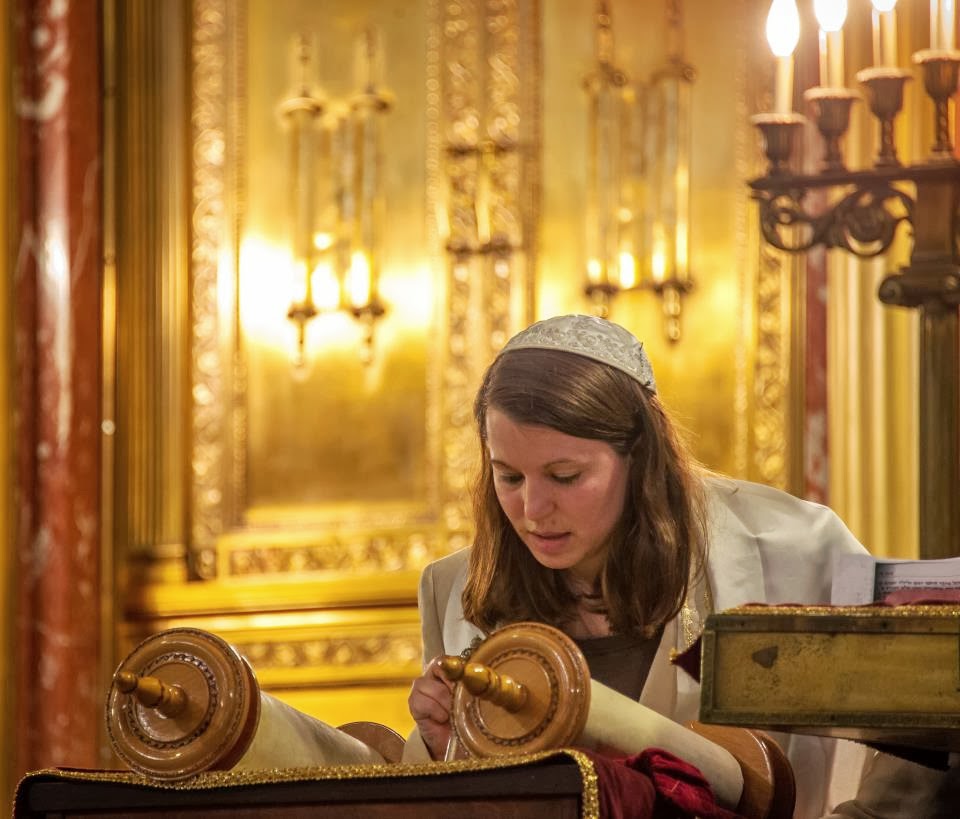
Shana Tova. It’s so good to see you all here tonight! This is a very special Shabbat, because it is Erev Yom Kippur. For a lot of Jewish adults, Kol Nidre, the big prayer of tonight, that we heard Cantor Noni chant earlier, is one of the most important, spiritual, holy moments of the year. Something about that prayer makes people feel reminded of their Jewishness in a way a lot of us don’t remember day to day. The same can be said for High Holy days in general, and the blowing of the shofar, that calls people back to a memory of our ancestors, Abraham, Isaac, Jacob, Sarah, Rebecca, Rachel, and Leah. But there is something extra special about Kol Nidre.
You’ll see it in movies and plays and stories (The Jazz Singer, Cutman). Young Jewish people like all of you that want to be singers or play an instrument. Or maybe they want to be boxers, or join some kind of club, and maybe those meetings or practices or performances conflict with their Jewish lives. In these stories, we see the main characters trying to find the balance between being Jewish and being a regular kid like their non-Jewish friends. But the big decision making always comes down to Kol Nidre. The big performance or boxing match that could make or break their careers and make them rich and famous, happens to fall the evening before Yom Kippur. Not to ruin any classics for you, but I’ll tell you, in the Jazz Singer, the main character chooses temple over his big performance, and it looks like the right choice but then movie ends so we don’t really know. In Cutman, the main character chooses his boxing match over temple and he gets beat real bad and decides to never miss shul again. I’m not saying that something bad would happen if you and any Jewish person decided to skip an Erev Yom Kippur service; that’s just a story. But you might regret it here [point to heart].
I’m sure some of you have had to choose sometimes, or maybe your parents have chosen for you, whether to go to soccer practice or Hebrew school. And maybe even tonight, your friends are having a sleepover or are all at the movies, but you’re here. It’s hard sometimes to remember to put your Judaism before your secular interests and hobbies. But it’s important to do, and probably in your future, this day will serve as the reminder for that. A lot of grown-ups don’t come to services every Friday night. Even if they know how important it is and they want to be able to do so, they maybe have to work late, or take care of their kids. Sometimes it feels like life gets in the way of being Jewish, especially for us as Reform American Jews. Or are we Reform Jewish Americans? Sometimes we forget or get confused about which part comes first. But when we hear Kol Nidre being chanted, we always remember we are Jews. May you continued to be reminded every Shabbat and holiday this year, and again, Shana Tova (Happy New Year).
Friday, October 7, 2011

Rosh HaShana Sermon
In the beginning there was darkness. On the first day, G-d created light and separated the light from the dark and called the light day and the dark night and G-d saw that this was good. There was an evening and then there was a morning, a First Day. The autumn brings with it the fallen leaves, the dead grass, and the chills that foretell winter is just around the corner. The sun sets earlier and earlier every night, and light that follows the dark is months away in the Spring.
Rosh HaShana marks the evening of the year. Aside from the fact that it began at sundown, as every Jewish holiday and traditionally each day really does, autumn is the seasonal equivalent of evening. It’s not quite winter (nighttime) but it is twilight. The darkness approaches. What does it mean to us that we begin each day and each year with a darkening instead of with the dawning of light? Why isn’t New Year (Jewish or Gregorian) in the Spring with the dawn of new life? There was evening and then morning, one day.
We’ve all heard the expression, “It’s always darkest before the dawn.” In the beginning there was darkness, and G-d created light. When I was finishing up college, beyond the jubilation of graduation, there was an intense fear of the unknown. This fear became anxiety and depression as various Jewish jobs and internships and rabbinical schools could not seem to find a place for me in their communities. Throughout all of college and, indeed, most of my academic career, I planned on becoming a Rabbi and just assumed that each step would follow the last exactly as I pictured it. Well, life doesn’t work that way. I was forced to take a year off from “The Plan,” and just live for a while after college. In the beginning there was darkness.
One day early last Spring, a college friend came to visit from Great Neck, NY the apartment I shared with two other former Hampshire students. I was discussing with him how I was not accepted to the rabbinical school of my choice, and would have to spend a second year out of school. I had no idea what to do, as I certainly wasn’t about to spend a second year in Western Massachusetts hanging out with college friends feeling anxious. Should I go to Israel? Should I apply last minute to Yeshiva University and get an MA in Jewish administration and become a rabbi in twenty years instead of now? This friend looked at me funny and said, “Why didn’t you just apply to my mom’s school?” All the years we had been friends and I had known his mom was a teacher, I just assumed she taught at a Jewish day school. I had no idea she worked at a trans-denominational rabbinical school. I didn’t even know the Academy for Jewish Religion existed. I applied, was accepted, and shortly thereafter received an internship offer at a lovely synagogue in Brooklyn. From spending the winter sitting on my couch reading Radical Judaism, to sitting in class at learning radical Judiasm, working with B’nai Mitzvah students and a youth group, essentially back on track toward living my dream. I’m working toward being radically rabbinical, shedding a new light onto Judaism, Jewish life, and Tikkun Olam. At Hampshire, the student body is largely self-proclaim radical social activists, and I sought to break down the beautiful idealism I shared with them into digestible pieces that fit more realistically into the world. I find that Judaism teaches us well how to repair the world rather than tear it apart and start anew (which is how I felt many of my peers viewed their call to activism). This friend from Great Neck, the son of a rabbi and a rabbinic teacher, was always one of my most fervent supporters. If he had not been such a good friend, if he did not believe in my dreams or in my ability to fulfill them, if he had not been there that particular weekend, when I had received my letter from the other rabbinical school, if his mother did not teach at Academy for Jewish Religion, if, if, if… Would I have found my way back on track on my own? Where would I have decided to spend this year if not AJR? But then G-d created light.
As Jews, we’re good at remembering darkness in light. Each year we light a candle on the anniversary of the death of a loved one. There is a light in front of us, a celebration of that person’s life, but there’s a darkness in our hearts that they are gone that needs a physical representation that is the Yartzeit candle. When we celebrate our freedom each year during Passover, we are also reminded of the slavery that preceded it, and eat the bitter herbs lest we ever forget. In the beginning, there was darkness and G-d created light.
With this New Year, this synagogue is undergoing a transformation of its own. I know I am not intimate with nuances of this transition for all of you, but as this is all new for me it is unifying to say for all of us, we are now in the process of each creating our light together anew. After darkness comes light, and creation follows. The new year starts with a seasonal dusk, followed by complete night, but we all know that the day follows, that there will be light and spring and new beginning to come in this year. May you all find the light you seek within and around you. Amen.
Rosh HaShana marks the evening of the year. Aside from the fact that it began at sundown, as every Jewish holiday and traditionally each day really does, autumn is the seasonal equivalent of evening. It’s not quite winter (nighttime) but it is twilight. The darkness approaches. What does it mean to us that we begin each day and each year with a darkening instead of with the dawning of light? Why isn’t New Year (Jewish or Gregorian) in the Spring with the dawn of new life? There was evening and then morning, one day.
We’ve all heard the expression, “It’s always darkest before the dawn.” In the beginning there was darkness, and G-d created light. When I was finishing up college, beyond the jubilation of graduation, there was an intense fear of the unknown. This fear became anxiety and depression as various Jewish jobs and internships and rabbinical schools could not seem to find a place for me in their communities. Throughout all of college and, indeed, most of my academic career, I planned on becoming a Rabbi and just assumed that each step would follow the last exactly as I pictured it. Well, life doesn’t work that way. I was forced to take a year off from “The Plan,” and just live for a while after college. In the beginning there was darkness.
One day early last Spring, a college friend came to visit from Great Neck, NY the apartment I shared with two other former Hampshire students. I was discussing with him how I was not accepted to the rabbinical school of my choice, and would have to spend a second year out of school. I had no idea what to do, as I certainly wasn’t about to spend a second year in Western Massachusetts hanging out with college friends feeling anxious. Should I go to Israel? Should I apply last minute to Yeshiva University and get an MA in Jewish administration and become a rabbi in twenty years instead of now? This friend looked at me funny and said, “Why didn’t you just apply to my mom’s school?” All the years we had been friends and I had known his mom was a teacher, I just assumed she taught at a Jewish day school. I had no idea she worked at a trans-denominational rabbinical school. I didn’t even know the Academy for Jewish Religion existed. I applied, was accepted, and shortly thereafter received an internship offer at a lovely synagogue in Brooklyn. From spending the winter sitting on my couch reading Radical Judaism, to sitting in class at learning radical Judiasm, working with B’nai Mitzvah students and a youth group, essentially back on track toward living my dream. I’m working toward being radically rabbinical, shedding a new light onto Judaism, Jewish life, and Tikkun Olam. At Hampshire, the student body is largely self-proclaim radical social activists, and I sought to break down the beautiful idealism I shared with them into digestible pieces that fit more realistically into the world. I find that Judaism teaches us well how to repair the world rather than tear it apart and start anew (which is how I felt many of my peers viewed their call to activism). This friend from Great Neck, the son of a rabbi and a rabbinic teacher, was always one of my most fervent supporters. If he had not been such a good friend, if he did not believe in my dreams or in my ability to fulfill them, if he had not been there that particular weekend, when I had received my letter from the other rabbinical school, if his mother did not teach at Academy for Jewish Religion, if, if, if… Would I have found my way back on track on my own? Where would I have decided to spend this year if not AJR? But then G-d created light.
As Jews, we’re good at remembering darkness in light. Each year we light a candle on the anniversary of the death of a loved one. There is a light in front of us, a celebration of that person’s life, but there’s a darkness in our hearts that they are gone that needs a physical representation that is the Yartzeit candle. When we celebrate our freedom each year during Passover, we are also reminded of the slavery that preceded it, and eat the bitter herbs lest we ever forget. In the beginning, there was darkness and G-d created light.
With this New Year, this synagogue is undergoing a transformation of its own. I know I am not intimate with nuances of this transition for all of you, but as this is all new for me it is unifying to say for all of us, we are now in the process of each creating our light together anew. After darkness comes light, and creation follows. The new year starts with a seasonal dusk, followed by complete night, but we all know that the day follows, that there will be light and spring and new beginning to come in this year. May you all find the light you seek within and around you. Amen.
Monday, December 20, 2010
Monday, December 13, 2010
Bearing Witness
By Lizz Goldstein
Can you hear the prayers of the children, aching for home, for something of their very own?
Empty eyes with no more tears to cry, turning heavenward toward the light. For when darkness
clears I know You’re near, giving loving arms away from harm. [We need a source]
[We need an intro to explain why and with whom–group, individuals–you made this trip]
After my first day in Oswiecim, Poland, I was unsure how to feel. Having spent several
hours at Auschwitz, now very preserved and museum-like, I was shocked that I did not cry at
all that first day. I thought maybe it was due to the historical distance between my present life
and when these atrocities occurred. I assumed that, for a Jew, the Holocaust narrative would feel
close to home, but in Oswiecim I felt sad and disconnected.
After that first day, I did not return to Auschwitz, instead I spent the daylight hours of the
next four days at Auschwitz II–Birkenau. On the third day at Birkenau, the tears finally came–in
the women’s barracks, the first barracks I saw from the inside. The moment I walked in, it all
erupted. Birkenau is a perfectly appropriate place to bear witness for crimes against humanity.
We were told a story about a woman who was punished by being forced to spend the
night outside, naked, in the middle of the winter (she did survive), but inside the barrack there
was a fireplace. I cried for the women whose souls inhabit the space I walked through at that
moment. I was crying for the grandchildren of those women–the grandchildren so traumatized by
the experiences of their forebears. I was crying for everybody everywhere across history whose
identity and livelihood was stripped from them for illegitimate reasons of hatred and fear.
More of such thinking and crying and bearing witness continued as we visited the
children’s barracks, met survivors, visited the crematoriums and ash fields. After a full five days
in Oswiecim, it was time to move on to visit the old cities of Krakow and Warsaw and try to get a
sense of what life might have been like there pre-war. We saw some interesting sights–museums,
monuments, etc.--but I spent the second five days in Poland eager to move on to Vilnius.
My great-grandparents, like many American Jews, came from Vilnius, or Vilna as they
called it. It was once the Jerusalem of Europe, overflowing with Jewish culture and life,
integrated with Lithuanian culture and life. The Jews were generally accepted and embraced in
Vilna, allowed to thrive and prosper there (relatively speaking). By the time I got there, sixty-
nine years after the city rid itself of its Jewish residents, all signs of Jews were gone.
I found the city generally to be far more welcoming, beautiful, and friendly than any of
the Polish cities I visited. Most people seemed eager to express their anger over what the Nazis
did to them, their wish for peace with their past, for a Jewish life again in Vilnius. But as I passed
church after church–every other block had a church from any given decade over the last five
hundred years–I was struck by the realization that the entire country of Lithuania has only two
functional synagogues left. People lined the streets, straining to hear the mass coming out of the
church of the Gates of Dawn, but the Jewish Community Center of Vilnius has to pay ten men to
ensure that there is a minyan at the Choral synagogue every Shabbat.
There was not much memorialized of the former Jewish residents of Vilnius. The old
ghetto is unmarked, the Jewish Museum is about four rooms. After I visited these four rooms, the
curator gave me directions to the “Holocaust exhibit” down the street. It was not a Holocaust
exhibit. It was a museum dedicated to the slaughter of Lithuanian nationals by the Soviet
occupation following the Nazi occupation. Though fascinating, important and equally as
horrifying as any other crime against humanity, it is not the Holocaust. This misunderstanding
was likely due to the language barrier, but to me it felt like a reinforcement of the silence
surrounding the Lithuanian involvement in the murder of our people. If it’s not discussed, if we
group together different atrocities as one, then blame cannot be placed. I fear, if responsibility is
shrugged off and never accepted, then the lessons history has to teach are not fully learned.
Although I experienced a great deal of sadness and anger during my two weeks abroad,
the trip filled me with inspiration to continue to bear witness and to continue to teach others how
to bear witness. And, in this way, maybe the next time we say “Never Again!” it might be true.
777 words
Can you hear the prayers of the children, aching for home, for something of their very own?
Empty eyes with no more tears to cry, turning heavenward toward the light. For when darkness
clears I know You’re near, giving loving arms away from harm. [We need a source]
[We need an intro to explain why and with whom–group, individuals–you made this trip]
After my first day in Oswiecim, Poland, I was unsure how to feel. Having spent several
hours at Auschwitz, now very preserved and museum-like, I was shocked that I did not cry at
all that first day. I thought maybe it was due to the historical distance between my present life
and when these atrocities occurred. I assumed that, for a Jew, the Holocaust narrative would feel
close to home, but in Oswiecim I felt sad and disconnected.
After that first day, I did not return to Auschwitz, instead I spent the daylight hours of the
next four days at Auschwitz II–Birkenau. On the third day at Birkenau, the tears finally came–in
the women’s barracks, the first barracks I saw from the inside. The moment I walked in, it all
erupted. Birkenau is a perfectly appropriate place to bear witness for crimes against humanity.
We were told a story about a woman who was punished by being forced to spend the
night outside, naked, in the middle of the winter (she did survive), but inside the barrack there
was a fireplace. I cried for the women whose souls inhabit the space I walked through at that
moment. I was crying for the grandchildren of those women–the grandchildren so traumatized by
the experiences of their forebears. I was crying for everybody everywhere across history whose
identity and livelihood was stripped from them for illegitimate reasons of hatred and fear.
More of such thinking and crying and bearing witness continued as we visited the
children’s barracks, met survivors, visited the crematoriums and ash fields. After a full five days
in Oswiecim, it was time to move on to visit the old cities of Krakow and Warsaw and try to get a
sense of what life might have been like there pre-war. We saw some interesting sights–museums,
monuments, etc.--but I spent the second five days in Poland eager to move on to Vilnius.
My great-grandparents, like many American Jews, came from Vilnius, or Vilna as they
called it. It was once the Jerusalem of Europe, overflowing with Jewish culture and life,
integrated with Lithuanian culture and life. The Jews were generally accepted and embraced in
Vilna, allowed to thrive and prosper there (relatively speaking). By the time I got there, sixty-
nine years after the city rid itself of its Jewish residents, all signs of Jews were gone.
I found the city generally to be far more welcoming, beautiful, and friendly than any of
the Polish cities I visited. Most people seemed eager to express their anger over what the Nazis
did to them, their wish for peace with their past, for a Jewish life again in Vilnius. But as I passed
church after church–every other block had a church from any given decade over the last five
hundred years–I was struck by the realization that the entire country of Lithuania has only two
functional synagogues left. People lined the streets, straining to hear the mass coming out of the
church of the Gates of Dawn, but the Jewish Community Center of Vilnius has to pay ten men to
ensure that there is a minyan at the Choral synagogue every Shabbat.
There was not much memorialized of the former Jewish residents of Vilnius. The old
ghetto is unmarked, the Jewish Museum is about four rooms. After I visited these four rooms, the
curator gave me directions to the “Holocaust exhibit” down the street. It was not a Holocaust
exhibit. It was a museum dedicated to the slaughter of Lithuanian nationals by the Soviet
occupation following the Nazi occupation. Though fascinating, important and equally as
horrifying as any other crime against humanity, it is not the Holocaust. This misunderstanding
was likely due to the language barrier, but to me it felt like a reinforcement of the silence
surrounding the Lithuanian involvement in the murder of our people. If it’s not discussed, if we
group together different atrocities as one, then blame cannot be placed. I fear, if responsibility is
shrugged off and never accepted, then the lessons history has to teach are not fully learned.
Although I experienced a great deal of sadness and anger during my two weeks abroad,
the trip filled me with inspiration to continue to bear witness and to continue to teach others how
to bear witness. And, in this way, maybe the next time we say “Never Again!” it might be true.
777 words
Tuesday, December 7, 2010
Bearing Witness in retrospect
Can you hear the prayers of the children, aching for home, for something of their very own? Empty eyes with no more tears to cry, turning heavenward toward the light. For when darkness clears I know You’re near, giving loving arms away from harm.
After my first day in Oswiecim, I was unsure how to feel. Having spent several hours at Auschwitz I, now very preserved and museum-like, I was shocked that I did not cry at all that first day. I thought maybe it was due to the distance in history between myself and when these atrocities occurred. I assumed that as a Jew, the Holocaust narrative would feel close to home, but in Oswiecim, I felt sad but disconnected. I thought maybe I should visit Srebenica, an attempt at genocide that I actually remember happening. Maybe that would reach deeper.
After that first day, I did not return to Auschwitz I, instead spent the most of the daylight hours for the four days at Auschwitz II – Birkenau. On the third day in Oswiecim, the second day at Birkenau, the tears finally came. In the women’s barracks, the first barracks I saw from the inside. The moment I walked in, it all erupted in me. And I realized, yes, it would be interesting to see Srebenica and Bear Witness to something I remember, but the distance in history means very little in actuality. Acts of atrocious inhumanity are acts of atrocious inhumanity, and not much has changed in the world in the last seventy years. Birkenau is a perfectly appropriate place to Bear Witness for all the crimes against humanity. We were told a story about a woman who was punished by being forced to spend the night outside, naked, in the middle of the winter (she did survive), but inside the barrack there was a fireplace. Where is the line drawn when monsters are deciding what basic human needs can be afforded to people seen as cockroaches? As I cried for the women whose souls inhabit the space I walked through that moment, I was also crying for the woman of the Argentine Dirty War whose captors fed her a full hot meal to bring her back from the brink of death, only to send her back to the torture chambers afterwards. I was crying for the grandchildren of the women whose souls inhabit the space I walked through; the grandchildren so traumatized by the experiences of their forebears as well as the terror in their own lives that they have felt forced into exposing another group into inhumane circumstances that we as Jews should be all too familiar with. I was crying for the disenfranchised disabled people, sexual minorities, and lower class Americans still kept apart from the “desirables” even in a free country. I was crying for everybody everywhere across history whose identity and livelihood was stripped from them for illegitimate reasons of hatred and fear.
More of such thinking and crying and Bearing Witness continued as we visited the children’s barracks, met survivors, visited the crematoriums and ash fields. After a full five days in Oswiecim, it was time to move on to Krakow and Warsaw to visit the old cities, and try to get a sense of what life might have been like there pre-war. Or even if there had not been a war. I found Poland to be cold and uninviting. I had fun with new friends I met on the retreat, saw some interesting sights (museums, monuments, etc) but spent the second five days in Poland eager to move in to Vilnius.
My great-grandparents, like many American Jews, came from Vilnius, or Vilna as they called it. It was once the Jerusalem of Europe, overflowing with Jewish culture and life, integrated in with Lithuanian culture and life. The Jews were generally accepted and embraced in Vilna, allowed to thrive and prosper there (relatively speaking). By the time I got there, sixty-nine years after the city rid itself of its Jewish residents, all signs of us were gone. I found the city generally to be far more welcoming, beautiful, and friendly than any of the Polish cities I visited, and most people seemed eager to express their anger toward what the Nazis did to them, their wish for peace with their past, for a Jewish life again in Vilnius. But as I passed church after church, every other block had a church from any given decade over the last five hundred years. But the entire country of Lithuania has only two functional synagogues left. People lined the streets, straining to hear the mass coming out of the church of the Gates of Dawn, but the Jewish Community Center of Vilnius has to pay ten men to ensure that there is a minyan at the Choral synagogue every Shabbat. There was not much even memorialized for the former Jewish residents of Vilnius. The old ghetto is unmarked, the Jewish Museum is about four rooms. After I visited these four rooms the curator gave me directions down the street to the “Holocaust exhibit.” It was not a Holocaust exhibit. It was a museum dedicated to the slaughter of Lithuanian nationals by the Soviet occupation following the Nazi occupation. Though fascinating, important, and equally horrifying to any other crime against humanity, it is not the Holocaust. This misunderstanding was likely due to the language barrier, but to me it felt a reinforcement of the silence surrounding the Lithuanian involvement in the murder of our people. If it’s not discussed, if we group together different atrocities as one, then blame cannot be placed. And I’m not looking for someone to blame, really. It’s been seventy years; let’s move on. But my fear is if responsibility is shrugged around and never accepted, than the lessons history has to teach are not fully learned.
After reading all this sadness and anger I experienced during my two weeks abroad, it may sound like I didn’t enjoy the trip. On the contrary, it filled me with such inspiration to continue to Bear Witness. Continue to teach others how to Bear Witness. And in this way maybe the next time we say, “Never Again!” it might be true.
Tuesday, October 5, 2010
At the request of my father, repostedness
Bearing Witness Retreat at Auschwitz/Birkenau
November 1 - 5, 2010
Tragedy and Healing
"Auschwitz not only represents one of the greatest tragedies of the 20th century, but perhaps, in the nature of a profound paradox, a potential source of great healing." - from Michael O' Keefe's Raising the Ashes. Click below to watch the Raising the Ashes trailer and learn why people from a variety of faiths and nations have been bearing witness at Auschwitz for over a decade.
"This retreat at Auschwitz offered profound affirmation that when we continue to listen to ourselves and others with an open mind and heart, death and pain of body and spirit, however terrible, can never offer a final answer," explains Jiko McIntosh in a Bearing Witness Blog article. Stay tuned for e-mails next week for more descriptions of the Bearing Witness experience. Would you like to participate? Read more. Register.
Do you want to support bearing witness at Auschwitz, but you are unable to attend this November? We are offering our ten remaining copies of the Raising the Ashes documentary as gifts to people who contribute scholarship money to bring together at Auschwitz young adults from key conflict areas. Your contribution of $500 matched by an equal contribution from the Zen Peacemakers, could, for example, make it possible for a young Palestinian to join a young Jewish Israeli to practice listening and sharing from the heart.
Become full sponsor to a young adult
Learn More:
Read more and/or Register at the Auschwitz Retreat web page. Visit the Auschwitz page of the Bearing Witness Blog to view photos, read accounts of and listen to talks about last June's retreat, as well as to read teachings from Bernie Glassman regarding Bearing Witness at Auschwitz as spiritual practice.
Friday, October 1, 2010
East Side, West Side, Genocide
According to this news article: http://www.bbc.co.uk/news/world-africa-11450093 the slaughter of Rwandan refugees in the Democratic Republic of the Congo in the 1990's could be considered genocide. My first reaction to this was, "Well, duh." My second reaction was, "What good is applying that label to the past violence if we're still ignoring the current violence, or the connections between the two?"
As my first academic year outside of school begins, I am thinking about how to put my education on genocide and human rights to use. I'm teaching 7th graders how to put the "mitzvah" in Bar Mitzvah, I'm going on a Bearing Witness retreat to Auschwitz and Birkenau, followed by my own pilgrimage to Vilnius, and most importantly, I'm working in a deli. In a lot of ways I'm still burnt out from Div III and I'm not sure how to go about saving the world on my own time now. But then I read this article about the Congo and I think, "Man people are so stupid!" and realize that I guess I just need to stay up on this soapbox a little longer and then maybe I won't be alone in this whole world-saving thing.
Now you know. And knowing is half the battle.
As my first academic year outside of school begins, I am thinking about how to put my education on genocide and human rights to use. I'm teaching 7th graders how to put the "mitzvah" in Bar Mitzvah, I'm going on a Bearing Witness retreat to Auschwitz and Birkenau, followed by my own pilgrimage to Vilnius, and most importantly, I'm working in a deli. In a lot of ways I'm still burnt out from Div III and I'm not sure how to go about saving the world on my own time now. But then I read this article about the Congo and I think, "Man people are so stupid!" and realize that I guess I just need to stay up on this soapbox a little longer and then maybe I won't be alone in this whole world-saving thing.
Now you know. And knowing is half the battle.
Subscribe to:
Posts (Atom)