Thursday, October 11, 2018
Parashat Noah and Keeping Kosher without Defined Kashrut
Shabbat Shalom! In this week’s Torah portion of Parashat Noach, God tells Noah to take pairs of all the animals on Earth onto the ark, male and female, so that the species will not go extinct as the Earth is destroyed. First, God says to take two of everything, but in the next chapter (Genesis 7) as more details unfold, God says to take 7 pairs of every clean animal, and one pair of every not-clean animal.
What does clean and not-clean mean? The Hebrew used is not the same as would be used for, say, clean and dirty laundry (naki). It uses the word “tehora” for ritual purity, meaning the “clean” animals in this case are ones suitable for sacrifices to God or are considered Kosher. And yet, at this point in the Torah, Kosher laws have not yet been given, only one animal sacrifice has been made, and it’s unclear how Noah would know what was clean or not-clean. It also seems worth noting that the Torah literally says “tehora” and “lo tehora” or “ein tehora”, meaing “pure” and “not pure” or “without purity”, rather than using the typical opposite term of “tamei”. So although these verses imply some sense of what would be considered pure in the mitzvot ahead, they also imply that perhaps the full scope of what it meant to be pure/impure was not yet known.
It is generally believed that the first humans did not eat meat, and were only officially allowed to eat meat after the flood. Some midrashim even point to cruel methods of animal-eating as some examples of the violence of the generation of the flood. Commenting on Parashat Bereshit, the Talmud says, “The First Earthling was not permitted meat for eating, as it is written, ‘...to you it will be for the eating. And to all the animals of the earth…’ and not [written] ‘the animals of the earth for you.’ And when the children of Noah came [out of the ark] it was permitted for them [to eat meat], as it is said, "as the green herb I have given for you all" (Sanhedrin 59b:13-14).” The 13th century Rabbi David Kimchi from Provence even went so far as to suggest that in the beginning, all animals ate only plants, even those which we would recognize today as predator animals. But after the Flood, God says to Noah, “Every creature that lives shall be yours to eat.”
This verse says “every creature,” and leaves out the concept of “tehora,” again drawing confusion about what the Torah means in chapter 7 and how Noah understands that. I will say on this matter, that I grew up eating “every creature,” or at least all the ones Americans generally eat, including treyf. I became a vegetarian at 12 and started eating meat again while in Israel at 20. Transitioning to keeping Kosher was not only easier in the sense that coming from vegetarianism, I was adding things back into my diet rather than restricting them, but it was also spiritually easier than diving fully back into eating anything. It made sense to only add certain dishes, and to keep kosher as a way of continuing to practice mindfulness over my animal consumption after years of refusing to eat them at all. It is not clear that this was the case for Noah, but I offer this anecdote as perhaps a look into Noah’s kashrut, despite the apparent reality that the laws of Kashrut were given many generations later.
At the beginning of this year (as in January, not as in Tishrei), a friend and fellow rabbi responded to a tweet asking if porgs (the vaguely penguin-esque creatures from Star Wars Episode VIII) were kosher. This led down a jackalope hole of what other fantastic beasts may or may not be Kosher. While looking further into that topic for our Fantastic Jewish Beasts and Where in the Text to Find Them event, I also purchased a book called “The Kosher Guide to Imaginary Animals.” It’s not unlike the original book of Fantastic Beasts and Where to Find Them, in that it is extremely short and reads basically like a short field guide to imaginary creatures, but then with the added element of determining whether or not Jews could or should eat them. For the most part, the answer is no. Don’t eat Fantastic Beasts. We’ll talk more about which ones and why on October 28th, but that seemed to be the answer for the majority of the creatures in the guidebook and in the Twitter thread, including the imaginary animals discussed a whole sideline conversation about what would be Kosher for Jewish dragons specifically. Several of the contributing writers to the guidebook, and the comments coming from the other rabbis jumping into the Twitter thread suggested that this type of conversation is not new or unusual. As long as humans have been eating meat, and as long as these myths and folklore have existed, people have pondered what could be on the menu, whether it is Kosher, how it could be caught and slaughtered, what it would taste like, how it should be served. It seems that if these are the conversations humanity seems to have been having for the last thousand years or so, then it’s not so far fetched that 3000 years ago, before Kashrut existed as such, humans were still in some fashion wondering, “Is this ok to eat? How can I eat it? Is it capture-able and able to be domesticated? Is it pure? Will it make me sick, physically or spiritually?” And if they determined that it was edible, could be domesticated, could be killed in a humane way and served in a manner than separated it’s intelligent predator from the knowledge that this too was once alive, then it was “clean”, or “tehora”, even if more specific identifiers for the pure and impure status had not yet been recorded.
This Shabbat, we bless all our animals. The ones we have loved as companions, and the ones that have nourished us. The ones that we have seen in zoos, and the ones we have only seen in our imaginations. Some animal-lovers prefer to stick to the vegetarian lifestyle, while others recognize distinctions between different sorts of animals. However you love your animals, however your diet, may you take the time this Shabbat to appreciate all the ways in which the animal kingdom, real and imagined, has served humanity, and may we give thanks to the Creator of all who has made a world with such diversity in creatures. Amen and Shabbat Shalom.

Parashat Noah - At Hogwarts
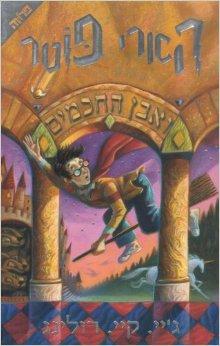
And now let us tuck in on the true Torah of Hogwarts. “Noah was a righteous man, blameless in his generation.” Rashi quotes the Talmud and explains to us, “Some of our Rabbis explain this to his credit: he was righteous even in his generation; it follows that had he lived in a generation of righteous people he would have been even more righteous owing to the force of good example. Others, however, explain it to his discredit: in comparison with his own generation he was accounted righteous, but had he lived in the generation of Abraham he would have been accounted as of no importance (cf. Sanhedrin 108a).” Rashi goes on, this time bringing in some material from the Midrash Rabbah (another rabbinical endeavor from a similar time period as the Talmud) saying, “In the case of Abraham Scripture says, (Genesis 24:40) ‘[God] before whom I walked’; Noah needed God’s support to uphold him in righteousness, Abraham drew his moral strength from himself and walked in his righteousness by his own effort (Genesis Rabbah 30:10).”
There’s a lot of comparing Noah to Abraham, which I would guess Noah would find annoying. No one wants the judgement of their own character to be something along the lines of, “Well, he’s not as great as the other guy…” So to best dive into a character analysis of Noah, we turn to the greatest insight tool known to man, wizard, and beast. The Sorting Hat. Which Hogwarts House would Noah be sorted into based on what we know about him? To answer this question, first I asked the Internet. I heard compelling arguments for all four houses:
- One rabbi said, “I thought Gryffindor. Apparent foolhardiness in the face of criticism (one way of framing bravery) is a Gryffindor thing.
- One well-educated Jewish professional said, “Ravenclaw. Shipbuilding is hard: astrological navigation, realizing you could use birds to detect land, etc. Noah's a dork,” much like those Ravenclaw know-it-alls.
- One rabbi, one rabbinical student, and one Universalist Unitarian minister agreed on Slytherin, though the rabbi certainly pondered the merits of all the Houses before reaffirming the reaction from her kishkes, while the other two left it at, “Slytherin no doubt. Ambition, self-interest, the whole package,” and, “He had a job that needed doing even if it meant letting the rest of the human race die.”
- Three laypeople voted for Hufflepuff, first because of the apparent passiveness of Noah following God’s orders and the Hufflepuff likelihood of getting swept into whatever mischief their friend’s are up to. I, being a Hufflepuff myself, argued that the reason Hufflepuffs get swept into things outside their control is due to their loyalty to their friends. Noah clearly had no loyalty or no friends, because he let the entire world die aside from his immediate family and some animals. The case was then made: “it could be argued that loyalty and faith are sister traits in this lens; Hufflepuffs are loyal to their fellow humans because of an inherent faith in humans. Noah was loyal to his lord’s vision because he had strong faith.” The last evidence in favor of Hufflepuff was that they’re hard worker too. Noah definitely had to work hard.
Further ideas on the matter included one voiced opinion that matched my initial thought: Slytherpuff, meaning that the Sorting Hat perhaps would have told Noah he was equally fit for either Slytherin or Hufflepuff. However, that person did not follow up with reasoning, and so I think it is fair to discount that opinion. And lastly, one opinion that discounted the idea that Noah would have been in any house. Not because the question is itself a fantasy, but on the merits of Noah’s characteristic of leadership: “He would have created his own house and students would have fought like the third monkey on the ramp when it was starting to rain to get into his house.” I am not entirely convinced Noah was really much of a leader, as he was only doing what God told him to do, but I certainly agree with the final analysis of the no-House train of thought.
With three votes for Hufflepuff and three votes for Slytherin, and two votes for Slytherpuff, I posed the question: If the Sorting Hat told Noah he was equally fit for either House and he had some choice in the matter, much like with Harry, what would Noah choose for himself? No one responded. So I did the next piece of research and rational rabbi would do: I took an online Sorting Hat quiz trying to embody Noah. It really took Bibliodrama to the next level. I thought about how Noah would view himself: Righteous and good, and also better than everyone else; chosen for a Higher purpose; willing to risk everything to fulfill that purpose, including other people’s lives; hardworking and conscientious when it comes to the task at hand, but also slovenly when the wine flows. The result according to The Ultimate Harry Potter Fan Quiz, as promoted by Time Magazine, is that Noah was a Ravenclaw. The quiz results read: “Your personality shows a high degree of work ethic and friendliness, which are valued among members of Ravenclaw House.” The runner up by a considerable margin was Gryffindor, and the percentages for Hufflepuff or Slytherin were pretty slim.
I have to say, the results were shocking to me, especially after also determining through some 6-degrees-of-separation-style mental gymnastics that Enoch, Noah’s great-grandfather, was Midrashically Professor Severus Snape. You see, at the end of Parashat Bereshit as we are getting the genealogy that brings us to Noah, the Torah says, “Enoch walked with God and was taken away by God.” One Midrash says he was taken to be the Metatron and the Great Scribe. Alan Rickman (z"l) played the Metatron in Dogma. Alan Rickman also played Snape in the Harry Potter movies. Another Midrash says that Enoch was inconsistent in his piety, meant to be righteous but was easily distracted by wickedness, much like Noah, in fact. The rabbis give a similar meaning to both verses about each man “walking with God”. And, Harry Potter fans know that Snape can be pretty inconsistent in his righteousness and wickedness. He is given to jealousy and selfishness but also shows great loyalty and willingness to self-sacrifice for that which he cares about. Enoch is Snape, and has arguably passed on many of those qualities to his great-grandson, Noah. And yet, the descendents of the Half-Blood Prince have broken the cycle of repeating wickedness and followed the plans of God to rebuild a new world of reason and restraint.
I know this because the internet doesn’t lie. Or it was just a fun thought experiment and is ultimately meaningless. It’s up to you. But whatever you take away from this deep dive into Noah’s character and the essential characteristics of each Hogwarts House, I hope that you at least learn from this that the gift of living after the Flood is that now we are given a heritage of this Torah to make our own. Whatever your fandom is, you can make your own Torah midrash with it, and you should. By looking at these timeless stories through every new lens imaginable, we internalize more deeply the lessons to be learned. We can model ourselves after Noah’s strong work ethic and friendliness, or the ease with which is distracting into wickedness. It’s up to us to see through all the strengths and flaws of our ancestors and learn from them how to do good in the world. It’s up to us to choose what lesson we need from Torah in the given moment of each of our lives. May you find the Torah and fandom that speaks to your heart, may it strengthen your spirit and fortify your theology, and may it bring you joy.
Friday, October 5, 2018
Parashat Bereshit - Fantastic Beasts
Shabbat Shalom! I have become totally obsessed with this Fantastic Jewish Beasts concept and cannot seem to focus on anything else for any length of time. Luckily, next week’s parasha dovetails (pun intended) perfectly with our second annual Blessing of Animals in our Pet Memorial Garden, and this week we hear about the creation of all animals, so get ready for a full month of divrei Torah on animals, mystical Jewish folklore, and/or connections to the Harry Potter Universe.
So, as I mentioned, this week’s Torah portion contains the stories of Creation, Parashat Bereshit. Genesis 1 tells us the story of the 7 days of creation, in which God made all the animals on 5th and 6th days. Genesis 2 tells the story of Adam, the first man. Seemingly, the order and purpose to the creation of animals is a little different in this story. There are many theories on this - academic theories about these stories being written in different times and places and passed down through different tribes of Israel, then both recorded in our canonized Bible for the purposes of keeping the peace between those tribes; midrashim about Lilith versus Eve, the superior imagination of Adam over the angels when it came to naming the animals, the particulars of creating the world versus creating the Garden of Eden, and so on. Last year, I taught a unit on Midrash to the 7th and 8th graders at Gesher and used this parasha as an example study. We looked at the ancient and medieval midrashim I just mentioned, and then the students offered some of their own answers: that Genesis 1 is the overview and Genesis 2 is the zoomed in story; that woman was created alongside man but gender roles and sex differences as we understand them today were created when Eve took on full form. This Torah portion offers so much to play with and create for ourselves, all within the parameters of the text itself.
But one thing all midrashists, ancient and contemporary, can agree on, one thing Genesis 1 and 2 both have in common, is the unique power of Divine Creation, which is far beyond even the amazing powers of imagination and creativity that we humans have been imbued with. When God creates in Genesis 1, it is with words alone. God says, “Let there be…” and there is. Even in Genesis 2 where the Torah tells us explicitly that man is created out of Earth and the Talmudic rabbis say this implies that the animals too were made this way, when God breathes a soul into Adam, he becomes something entirely new. This first human is in the image of God, with a touch of the Divinity of the angels, and some measure of the traits of each of the 10 Kabbalistic emenations of HaShem, and all of the earthiness of the animals. What a creation! A creation that can go on creating - inventing names for all the animals of the Earth and tending to the plants and creatures in the Garden, and that's before he even tastes the fruit of the Tree of Knowledge!
And yet, even after Adam and Eve eat the forbidden fruit and learn one more secret of creation, procreation, they and we are still limited in what we bring to life. Unlike God, we do not speak creatures into physical being. And if we were to form a being out of Earth and speak it to life, it still has no soul. Even in our imaginations, in our traditions of mythical creatures, when we create a humanlike being, it is not a human. The golem is formed out of clay or mud or dust, just as Adam was. The golem is spoken brought to life with a Divine word, just as Adam was. But the golem has no imagination as Adam did, and it has no ability to create more things for itself. It is soulless, thoughtless, capable of really only one thing according to tradition, and that thing is the opposite of creation. Its purpose is to destroy. It is created in times of trouble for the Jews and brought to life to destroy those who would destroy the Jews, but if not controlled closely, may keep on destroying blindly. It is a fantastic beast with great potential for benefit for its creators and also great potential harm, without the ability to discern which of its actions does which, much like many other beasts, real and imagined.
Humans, on the other hand, in being imbued with a soul and unique, though limited, powers of creation, should be able to discern the difference between help and harm. Therefore, we have a responsibility to help. When looking at options for actions, we must ask ourselves, “Does this action cause more pain for more people, or does it help alleviate the pain in the world?” Very rarely is the answer to this question cut and dry, but that doesn't mean we ever stop asking it. This is our job, a part of the legacy passed down from that first human who was charged with the duty to care for the world, to tend to creatures of all sizes and levels of perceived liveliness. May we take this job seriously and fulfill it with honor, and may we find that we create a world of diversity and peace. Amen and Shabbat Shalom.
Friday, September 28, 2018
Shabbat Sukkot
Shabbat Shalom v’moadim l’simcha!
This Shabbat, our scriptural calendar takes a break from the chronology of the
Torah. On Sunday, as we celebrate Simchat Torah we will read from the last
parasha of Deuteronomy and the first parasha of Bereshit, but for Sukkot we
revisit Exodus chapters 33-34. This Torah reading tells us of Moses’s and God’s
special relationship, and what God allowed Moses to see of the Divine Spirit.
It has the verse we refer to as “The 13 Attributes of Mercy” that is a part of
our High Holy Day liturgy. And it concludes with the commandments for the three
Festivals, including the Festival in Ingathering, Sukkot.
The Haftarah, from the exilic prophet of Ezekiel, tells us that God will make the Holy Spirit seen through natural disasters expressing God’s displeasure at those who displace the Israelites from their homelands and cause them to question God’s love for them. We see that God has many manifestations, the wave of goodness that passes by Moses in the cleft of the rock, the Divine inspiration for the Commandments on Mount Sinai, and the wrath that causes earthquakes and landslides. We see too that the Earth, though it predates us by billions of years and will last long after we’re gone, is not eternal and steadfast as is God. The face of the earth can be shifted if God so
chooses and everything is temporary.
At this time of year, we celebrate the fall harvest, and we cele brate God’s shelter through times of upheaval. Sukkot reminds us of our physical bounty, and the Sukkah reminds us of our ancestors wandering in the wilderness whose bounty was thanks only to God. And we remember as we sit in our temporary huts with roofs of organic material that will decay, that nothing in life lasts forever. Neither bounty nor hardship is eternal. And so it is with this remembrance in mind that we read Kohelet, or Ecclesiastes, as the Festival Scroll for Sukkot. You probably know the words of the first half of chapter 3 of this scroll, we will sing them in Pete Seeger’s tune at the end of the service. But if you are less familiar with the rest of the 11 and a half chapters, it’s pretty nihilistic. Ascribed to Solomon, the words are written in the first person by a wealthy and wise king who is simply over it all.
Everything in life is fleeting, and none of it really matters in the world to come, so what is the point, asks Kohelet. God will see to it that each thing is done in its season, and man really does not have the power he thinks he does. However, they aren’t really sad verses. They remind us to pursue the things in life that will truly uplift us. To trust in a higher power and a greater world, not in possessions or material wealth. To appreciate love and the warmth of friendship. To keep a keen perspective of a situation and never fall into either despair or manic excitement, for both will lead to mistakes.
This Shabbat, let us take a moment to appreciate all that we have, to remember those who have not, and to express our gratitude to those who provide for us physically, emotionally, and spiritually. Let us take this opportunity of openness and wisdom to broaden our love and strengthen our community. May we find shelter, comfort, bounty, and peace this Sukkot and throughout the year. Amen and Shabbat Shalom.
Friday, September 21, 2018
Parashat Ha'azinu and Sing-a-longs
Shabbat Shalom! This week’s Torah portion is Parashat Ha’azinu. It is Moses’s Swan Song, his final address to the people of Israel and also likely literally a song. It is written in a certain rhythm and physically written in the Torah in such a way as to suggest to us that it was a song, though of course we have long since lost Moses’s tune. Our Haftarah comes from II Samuel chapter 22, in which David’s last communion with God is also a song, and there the Tanakh does tell us explicitly so that it was a song. David’s final words to the People of Israel were not a song, but they are
introduced as being the saying of “the sweet singer of Israel.”
Music is important in Judaism. We chant our prayers, our Torah. We have 6 sets of cantillations for chanting the different books of the Tanakh or at different holidays, and each culture within Judaism has a different sound for their particular 6 sets of cantillations. We sing Nigun to get into the spirit of
prayer, or sometimes to set intention before Jewish learning. We have tunes we call “Mi Sinai,” meaning they feel so old and ubiquitous we treat them as if they were the tunes Moses himself brought down from on High and the Jewish people have been singing ever since. We have tunes written within this decade we like so much much we played them three times on Yom Kippur. Tradition holds that music has always been an important part of prayer, since the writing of the Psalms, and was used in Temple worship. The Talmud, Masechet Sukkot 51a, even says that singing is the primary form of worshipful music, though instruments were used to support the vocals in Temple worship.
And the singing doesn’t have to be great, either. The Shulchan Aruch says a spiritual leader should not be chosen for their singing voice alone, even if the community wishes to be led in beautiful songful prayer. I know I once read a Talmud quote that was something to the effect of, “When the tone deaf raise their voices in in prayer, a miracle happens,” though when I searched for the citation and exact wording I could not find it.
The point is, music uplifts the soul, and singing has been used from time immemorial to communicate religious expression. The songs shift and change, and they’ve been doing that for millenia too, but the meaning remains the same. This is why it is important to try to get beyond the tunes that remind you of your childhood or the tunes you think are the most traditional and experience the wide range of Jewish music that exists with an open heart. Something may be
new to you, but actually older than the the tune you are familiar with. Or it may be new, and there was a reason someone felt the need to write a new tune for a prayer or concept we’ve been singing another way for a decade. It is important to take the opportunities to learn other Jewish tunes, and share the ones you know and love as well, for the sake of enriching our prayer experiences as a
community. As Moses enriched his last treatise to the Israelites by singing it, as David enriched his communication with and about God by singing it, as the Levites enriched the Temple service by singing while the Kohanim presented sacrifices, and as Jewish musicians have continued this tradition for the last 2000 years since the Temple worship ceased, we continue this by trying
different music and ways to express our prayer. So please join me at the next pre-Shabbat sing-a-long on October 19th at 6:30 PM as we practice some tunes less commonly used at Ner Shalom that will be used when we host the Women of Reform Judaism on November 2nd. Join other future sing-a-longs and nigunim practices here at Ner Shalom and elsewhere. Search Jewish music on YouTube.
Check out the artists featured on the Transcontinental Music website.
May your life be full of song, your song full of prayer, and your prayer give you peace. Amen and Shabbat Shalom.
Wednesday, September 19, 2018
Yom Kippur Afternoon
Shalom, y’all! Hang in there as we continue through, and soon enough we’ll be in our concluding prayers. Remember, if you’re not feeling well, lie down in our lounge or take a quick fast break if you need some water or a snack before Break Fast. It is important to feel some discomfort to sit with the magnitude of this day as we cleanse our souls, but it is more important to take care of yourselves.
Now, our final Torah reading for the day comes from Leviticus, the holiness code. Some of it is a repetition of the Ten Commandments, while many other lines give us other commandments around sacrifices, about leaving the corners of the field for the hungry to come and eat, and guidelines to take care of ourselves, each other, and the environment. It starts with the commandment, “You shall be holy, for I the Lord your God am holy.” And what does this commandment mean? How can we hope to live up to God’s holiness?
Maimonides, who had a lot to say about how to properly repent and be holy and mark these days of awe, suggests that we must emulate specifically the 13 attributes of mercy that have become a piece of the High Holy Day liturgy: “The Lord! The Lord! God, Compassionate and Gracious, Slow to anger and Abundant in Kindness and Truth, Preserver of kindness for thousands of generations, Forgiver of iniquity, willful sin, and error, and Who Cleanses (but does not cleanse completely, recalling the iniquity of parents upon children and grandchildren, to the third and fourth generations)”.
If we are compassionate and gracious, slow to anger and abundant in kindness, if we are honest, forgive those who hurt us and apologize to those we hurt, we learn to walk in the holy ways of God. In doing so, we not only make ourselves holy for God, we help create a holy community, a kehillah kedosha, for those around us. Creating holiness within ourselves and our communities is an important step toward tikkun olam, and transforming these traits into actionable change for the world.
As the Gates of Repentance start to close this evening, may we find the strength for the coming year to emulate the Holy One and embody the mercy that leads to holiness on earth, for ourselves, for our friends, family, and community, and for the world.
Subscribe to:
Posts (Atom)