Friday, July 26, 2019

Parashat Pinchas


            Shabbat Shalom! This week’s Torah portion contains one of my favorite stories of early female empowerment. In Parashat Pinchas, the daughters of Tzelafchad advocate for themselves to inherit their father’s legacy, including the parcel of the Promised Land he would have settled when the People of Israel enter the land. Normally, this inheritance would be only for sons, but leaving none Tzelafechad’s legacy was up in the air. The daughters ask Moses, who asks God, for guidance, and are granted their rightful inheritance.  
            The Yalkut Shimoni, a book of medieval Midrash, offers the commentary, “When the daughters of Tzelafchad heard that the land was being divided among the tribes but not among the women, they convened to discuss the matter. They said: G‑d’s mercy and compassion is not like the compassion of man. Mankind favors men over women. G‑d is not like that; His compassion extends to men and women alike.”
            This teaching reminds us that God has created all of humanity in the Divine image, with inherent worth, and the right to live with dignity equal to that of all others. As humans, we often fail to see this. We forget, we miss the mark, we progress slowly and we never seem to reach our holy potential of taking care of our fellow man. But, it is our job as humans to be ever-striving to reach a Divine level of compassion, to remember to see people as God does: equal and inherently worthwhile.
            Just a few verses after the story of the daughters of Tzelafchad, Moses asks God to pick the leader that will replace him. Rashi offers his drash on this: “So said Moses to G‑d: ‘Master of the universe! You know the soul of each and every individual; You know that no two are alike. Appoint for them a leader who can relate to each and every one of them in accordance with his individual spirit.’”
            An important element to seeing the Divine spark in each person is being able to meet them where they are, to be open to dialogue and discourse, to be willing to be vulnerable and to understand the vulnerability of others. This is of course a particularly important in a person with authority, as Moses points out. But we all have the capabilities of being leaders in our own rights, and so we all need to be willing to embody this spirit of openness. We all have the power to connect with one another, to see the inherent worth of each and every person, and to lead our peers by example toward a more equal and kinder world. May we each take these opportunities each time they arise, and step into our own leadership roles with compassion and vision for a brighter future. Amen and Shabbat Shalom!

Friday, July 19, 2019

Parashat Balak and the 17th of Tammuz


Shabbat Shalom! This week’s Torah portion is Parashat Balak, a wild story about a talking donkey, angels, false prophets turned to true ones, and a curse that becomes a blessing. This Shabbat is also the 17th day of the Hebrew month of Tammuz. Though traditional observance of this fast day is moved to after Shabbat so as not to decrease the peace and joy of the Sabbath, we are told that this is the date on which five calamities befell the Jewish people: Moses broke the two tablets of stone on Mount Sinai; the daily tamid offering ceased to be brought; during the Roman siege of Jerusalem, the city walls were breached (proceeding to the destruction of the Second Temple); prior to Bar Kokhba's revolt, Roman military leader Apostomus burned a Torah scroll; an idol was erected in the Temple. This date begins the three weeks of mourning that lead up to Tisha B’Av, the date on which both Temples were destroyed by the Babylonians and the Romans, on which the Bar Kokhba revolt was fully crushed, on which the Jews were expelled from medieval England, and on which the Final Solution was determined in Wannsee.
Now, these are all terrible things, and most of them had lasting effects on the Jewish people. The most egregious atrocities were curses brought upon us by “enemy” nations. Unlike in the story of the prophet Balaam in this week’s Torah portion, these aggressors were not thwarted in time, and they were successful in bringing seeming ruin to the people. And yet, we survived. We thrived. And we will outlive all those who seek to destroy us.
When the non-Israelite prophet Balaam seeks to curse the Israelites on behalf of the Moabite king Balak, he is instead moved by the spirit of the Lord to speak the words that become the start to our Mah Tovu prayer: How lovely are your tents, O Jacob, your dwelling places O Israel. His curses were literally turned into blessings. We, the Jewish people, have managed to make some of the tragedies that have befallen us into blessings as well. We were slaves in Egypt and now we have the beautiful festival of Passover. We survived the attempted genocide of ancient Persia and now we have the feast of frivolity, Purim. The Babylonians destroyed our First Temple, but our ancestors and prophets maintained their Judaism in exile as best they could, and eventually built a second one. The Romans destroyed that one too, and we created synagogues, wrote the Talmud, and instituted rabbinic Judaism and prayers in lieu of sacrifices. Europe forced conversions, terrorized our communities, and kicked us out of nearly every country in the continent, so we picked up and formed new communities: in the Pale of Settlement, in the Holy Land, in the New World. We have known at least since the 3rd century CE that wherever we go, that is our homeland, that we are a resilient people who will form sacred communities wherever we find ourselves.
I often say, when we sing Mah Tovu, that what makes the tents of the Israelites lovely, what makes our synagogues a blessing, isn’t just the physical location and excellent design of the building, but the people in it. The love, the spirituality, the kinship that fills the space, that is what makes our houses of worship and meeting places beautiful and allows us build up a world of justice and love that helps us survive through difficult times. Even as we argue through our differences as Jews tend to do, may we all work to build unity and strength with our wider community and turn curses into blessings for our people, and for the world. Amen and Shabbat Shalom.

Friday, July 12, 2019

Parashat Chukat


            Shabbat Shalom! This week’s Torah portion, Parashat Chukat, focuses a lot on water: how it nourishes, how it purifies, how it can be monetized, how it can be withheld. It starts out with ritual laws commanding a cleansing done with “living waters” after a person has come into contact with a corpse. It continues with the narrative of the wells drying up after Miriam’s death, and the plight of a thirsty people wandering through a desert. The arguable climax of this part of the narrative is the infamous tale of God telling Moses to speak to a rock that water may spring forth, but instead he strikes the rock – twice – and speaks condescendingly to the thirsty Children of Israel as he does so. As a result, he is forbidden from entering the Holy Land. The parasha continues on from there about the attempts to enter the Land, and finding barriers from the people already living there. Moses promises them that they will not drink from the wells (which may mean, “we will not take your resources”, or some rabbis argue may mean “we will not drink from our own well, but promise to buy sustenance from you and support your local economy”). Yet, they are denied and forced into violent conflict and more wandering as they seek to enter into their Promised Land. 

            On the matter of the “living waters,” the Chassidic Masters say, “In other words, a spring which runs dry once in seven years is considered ‘false’ even when there is water flowing in it. This is lesson in the meaning of truth: something which exists under certain circumstances but ceases under other circumstances is not ‘true,’ even when it does exist.” The flip side of this also is that some things are still true even when we cannot see them, or try to ignore their reality. In reading this this commentary, I was reminding of the anonymous Holocaust-adjacent poem, “I believe in the sun even when it is not shining, I believe in love even when feeling it not, I believe in God even when God is silent.” Goodness, light, love, and the Divine spirit are present even when we feel at our lowest, and unfortunately, injustice, darkness, and brokenness are present in the world even when we try to look away from it. 

            On the matter of the attempts to enter the Holy Land and being met with resistance, Rabbi Shai Held reminds us that the main lesson of the Torah is, “Be kind to the stranger for you were strangers.” Although we most often hear this in connection with the experiences of Egypt, it is true here too as our people seek to resettle in the land that has been always been their Promised Land, a piece of their familial tales. We remember to be kind to travelers, for as travelers our lives were made even more difficult than need be. 
            Our country is currently facing a crisis with immigration. Due to many instabilities throughout the world, some of which our own foreign policies have contributed to, we have seen an increase in refugees and asylum seekers in recent years, people seeking safety in these lands sometimes without the access to the proper channels of legal resettlement. As Jews with a long history and varied cultural memory of being wanderers, refugees, exiles, outsiders in lands we thought of as part of our own, it is our responsibility to acknowledge the injustices happening now. In some of the detention centers, which primarily and racially target Central and South American immigrants, people are being denied, among other basic human necessities, fresh waters. There are no “living waters” with which to cleanse, and in some cases, people have reported being told to drink out of the toilet as drinking water is withheld. These camps are just one aspect of the wider concerns of American hospitality to immigrants and Jewish values of justice and truth-telling. They happen to be very distressing to me, but there are so many areas to get involved with these wider issues. We must use our cultural memories as Jews to be a teaching tool, to learn from history, face the dark truths we’d rather pretend don’t exist, and do what we can to change the situation going forward. 
            Thankfully, at Ner Shalom, we are already doing this as a community. We have signed our Good Neighbor partnership, and just this week had a training with the staff liaison at Lutheran Social Services. We will be settling a refugee family from Afghanistan, showing the hospitality that is denied to the Israelites in this week’s Torah portion, and bringing the Divine light and love of Judaism into the holy work of welcoming the strangers. If you weren’t able to attend the training, I hope you will still find ways to plug in and help. It is a big task we as a community have taken on, but with the help of our own Good Neighbors at Dar al Noor, and with all hands on deck from within Ner Shalom, it won’t be too much work for any of us to accomplish. 
            This Shabbat, may you feel the sunshine on your skin, have plenty of water to cool you down and slake your thirst in the hot sun, may you feel the love of community, the friendliness of strangers, and may you share your Divine Spark with the world. Amen and Shabbat Shalom. 

Friday, June 14, 2019

Parashat Naso


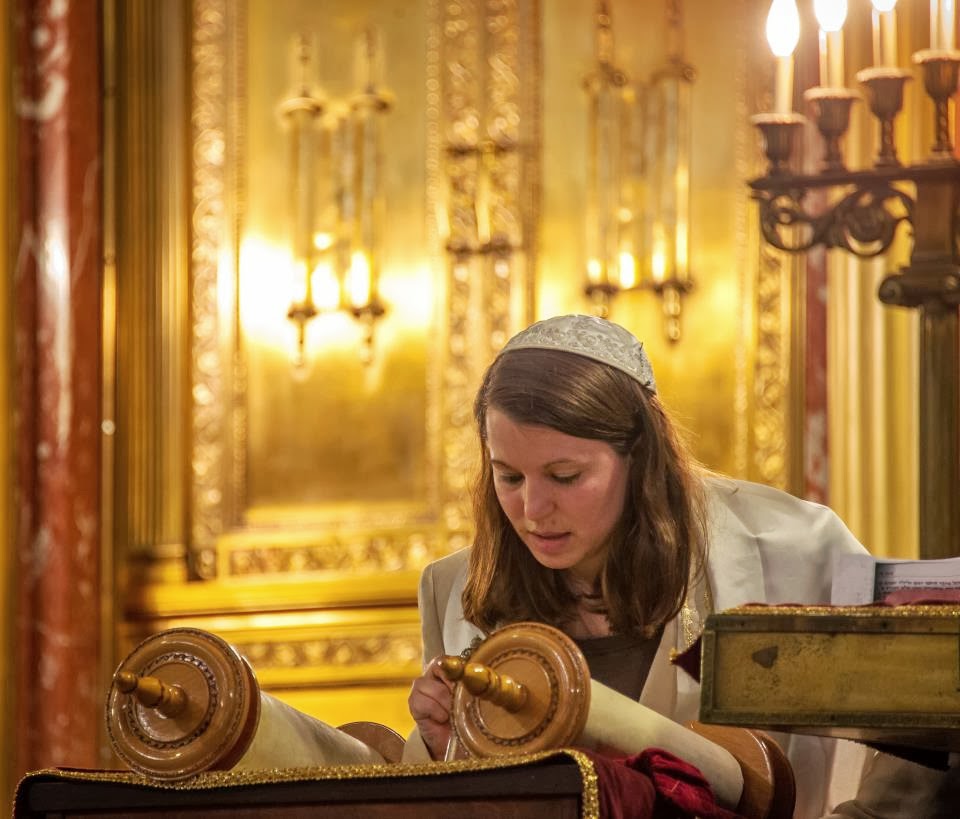
            Shabbat Shalom! You may not be surprised to hear that I am often asked why I wear a kippah. People of many backgrounds seem to find this confusing, particularly because I am a woman. And those who know me better like to tease me for the number of kippot I own and how I match them to my outfits. I feel connected to my head coverings and enjoy trying to make them fashionable for myself because it brings God into my mundane every day things like getting dressed. It’s not just an afterthought or something I do because I feel commanded to or expected to, it’s something I think about in the morning before setting out on my day. I also don’t wear one 100% of the time, and that is also a part of my considerations as I prepare for my day. What is on my schedule or to do list today? Are they things I want to physically feel God’s presence above me for? If so, are they in spaces I will feel comfortable wearing a kippah or do I want to opt for a less obvious head covering like a hat or bandana?
            All this to say that sometimes it is possible and even important to bring God into some decisions that may seem outside the realm of the holy and sacred. This week’s Torah portion, Parashat Naso, for example, spends considerable time discussing hair. The Torah tells us that it is possible for people to take stringent vows to commit themselves more deeply to God, but that they do not do this indefinitely. Nazirite vows are to be for a finite period, and this can be a predetermined time, or it can be cut off if a Nazirite accidently comes upon something that defiles his vows. During the time of his purity and commitment to HaShem, Nazirites are not to drink wine or cut their hair, as well abstain from feasts and fast more often than the proscribed fasts. The rabbis disagree about the righteousness of these decisions, which I think is preemptively why they are limited in time to begin with.
            As I was reading through the parasha this week, Numbers 6:9 caught my eye: “If a person dies suddenly near him, defiling his consecrated hair, he shall shave his head on the day he becomes clean; he shall shave it on the seventh day.” It reminded me of the last time I went to the mikveh, in 2015. You may or may not know about me that I have donated my hair several times to non-profits that make and distribute free wigs for cancer and alopecia patients. I like to time these dramatic 10-or-more-inch haircuts to coincide with transitions in my life (following high school and college graduation and getting married, etc.). I had planned to wait until 2016 and cut my hair around the time of my ordination. But the 2014-2015 school year had been a bit tougher than the previous three, and my hair was already more than long enough, and I decided I was ready for a change. Feeling inspired by an amazing course on “Architecture of Ritual” I took that year, I schedule a mikveh date and planned a meaningful, personal ritual with the help of a mikveh guide from ImmerseNYC, an organization that helps provide less traditional but no less meaningful mikveh rituals for people of all genders. The morning of my mikveh date, I cut off about a foot of hair. I didn’t quite shave my head, but it was pretty short. Then I went directly from the hair salon in Brooklyn to the West Side Mikveh in upper Manhattan (the mikveh that allows ImmerseNYC to use its facilities) and felt the purifying living waters of the mikveh run through my freshly shorn hair and over my newly bared neck. I still had the braid in my purse to mail to wigmakers.
I hadn’t been around any death within that previous seven days, but I felt I needed a cleansing and a haircut similar to that which is described in this parasha. In the time of the Torah, mikvot hadn’t quite been established yet – they’re still wandering in the desert; it’s hard to guarantee a pool of fresh water will be available any time someone needs a cleansing. But they did have a process of anointing the person with oil to signify their cleansing after the appropriate time of separation that established the person’s purification. The Torah doesn’t specify if this cleansing was done before or after the haircut on the seventh day of the Nazirite’s purification, but based on my experience I would hope after. I felt so free to be purified by the waters of the mikveh without being weighed down by long and heavy wet hair.
After my most recent donation, I got a letter back from the organization that they now have enough hair to make wigs to meet their projected needs for the next ten years and do not need anymore hair for a while. I heard from other friends who have also donated their hair that many of these types of organizations have said the same thing. So now for the first time in nearly 20 years I don’t really know what I want to do with my hair. My previous process felt holy – the big chop was always so freeing and helped me through transition periods of life, but mostly I did it for the mitzvah of helping children coping with serious illnesses that also cause them baldness. As I think through more ways to continue to mark endings and beginnings for myself, to show my honor for the Divine through mundane acts, and to bring holiness for myself into my daily life, I encourage you to do the same if you don’t already think about these things. How can you include Judaism in your regular decision making as you get dressed, decide on what to eat for dinner, how you wear your hair, how you move from one stage of life to another? Jewish tradition has many guidelines to help you, but there is so much room to go beyond halakha, and especially as Reform Jews it is up to each of us to find the rituals that make our lives most meaningful and lead us more toward a life path directed always toward tikkun olam. May you find your little rituals that bring you sanctity and peace, and guide you toward acts of tzedakah. And since this parasha also contains the priestly benediction: May HaShem bless you and keep you, may HaShem shine on you and be gracious to you, may HaShem lift Their face toward you, and give you peace.